Collected, Kept, and Loved: A Case for Tradition
In an age defined by constant motion— notifications, updates, shifting trends— it’s easy to believe that tradition belongs to the past. Those rituals slow us down, hold us in place, or make us appear rigid in a world built on reinvention. But what if tradition is not the anchor that keeps us from drifting forward, but the steadying force that helps us know exactly where we stand? Traditions, after all, are the moments when we exhale.
They are the familiar gestures tucked into our everyday lives— the morning ritual that begins the day just right, the holiday tablescape repeated year after year, the small seasonal routines that signal, quietly and confidently, you are home. In a world where we’re asked to continually decide what’s real and what’s noise, traditions become the compass points that guide us back to ourselves. They root us in memory, meaning, and a history that doesn’t shift with each passing trend.
Where Tradition Meets Design
Design, at its most personal, is one of the most powerful carriers of tradition. It shows up not only in what we style, but in what we choose to keep.
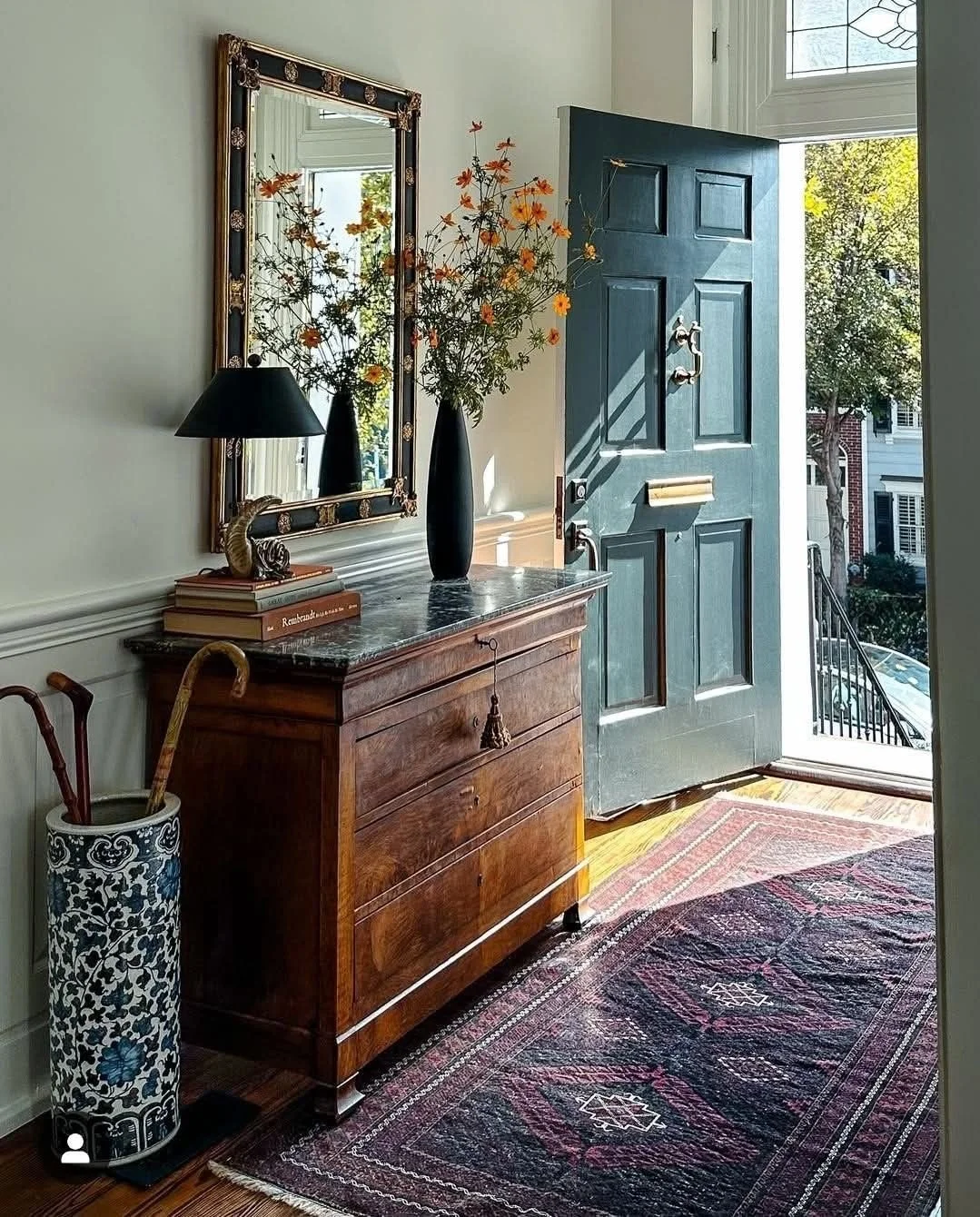
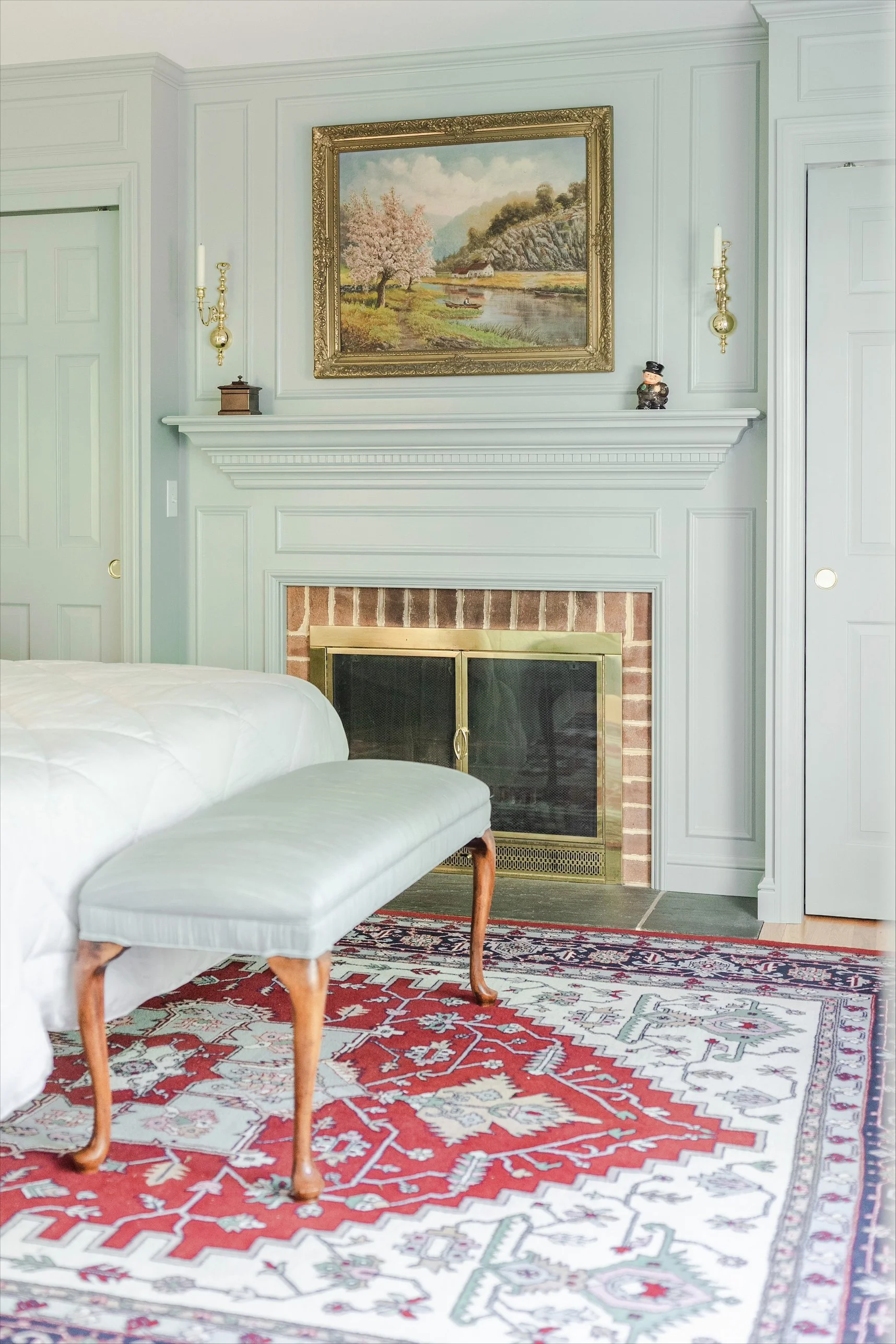
It’s the Christmas tree that returns to the same corner— even though the room technically doesn’t have room. Yet that corner matters, because it always has. It’s the gallery wall layered with art collected across chapters of life— each piece a marker of time, a place, or a person. It’s the entry table that once belonged to Nana, still offering its quiet welcome every time you walk through the door. And sometimes it’s right under our feet— an heirloom rug whose colors have softened with time, whose pattern is worn in exactly the spots where generations have gathered. An heirloom rug doesn’t just warm a room; it carries a lineage. Every step across it feels like stepping into a story that began long before we arrived. It’s the holiday china that only emerges once a year, not because it’s fragile, but because rituals deserve a kind of ceremony. Even a newly discovered antique— an aged chair, a vintage cabinet, a table with a patina earned over decades— can bring its own inherited tradition. These pieces don’t simply fill a room; they expand it. They carry a long, lived story, one that folds seamlessly into your own.
Holding On in a Throw-Away World
We live in a design culture that changes at a dizzying pace. Trends turn over quickly, and the pressure to “refresh” can feel relentless. But amid all of that, there is something profoundly grounding about honoring what has always mattered. A threadbare heirloom rug, a gallery wall collected over time, a piece of furniture touched by generations— these are the quiet anchors that keep a home from feeling disposable. They remind us that beauty isn’t always new, and meaning rarely is. Holding on to traditions— whether they are rituals or heirlooms— doesn’t resist change. It humanizes change. These pieces and practices remind us that while life moves forward, not everything should. Some things grow more beautiful, more essential, the longer we keep them.
A Home That Tells the Whole Story
When we allow tradition to remain a layer in our design, our homes tell a richer story: one that blends where we’ve been with where we’re going. New traditions form not from perfection, but from presence— moments lived within spaces that already hold so much of us. Design can evolve. Trends can shift. But the memories embedded in the corners we never change— and woven into the heirloom textiles we refuse to replace— become the soul of the home.
Tradition isn’t a limitation. It’s a luxury— one no trend can replace.